
The emergency medicine industry treats millions of head and neck injuries annually, yet it still relies on immobilization technology that hasn’t fundamentally changed since the 1960s. Archaic devices and makeshift stabilization methods frequently turn transport into a second point of risk. These preventable secondary spinal injuries compound trauma, prolong recovery, and drive substantial healthcare costs.
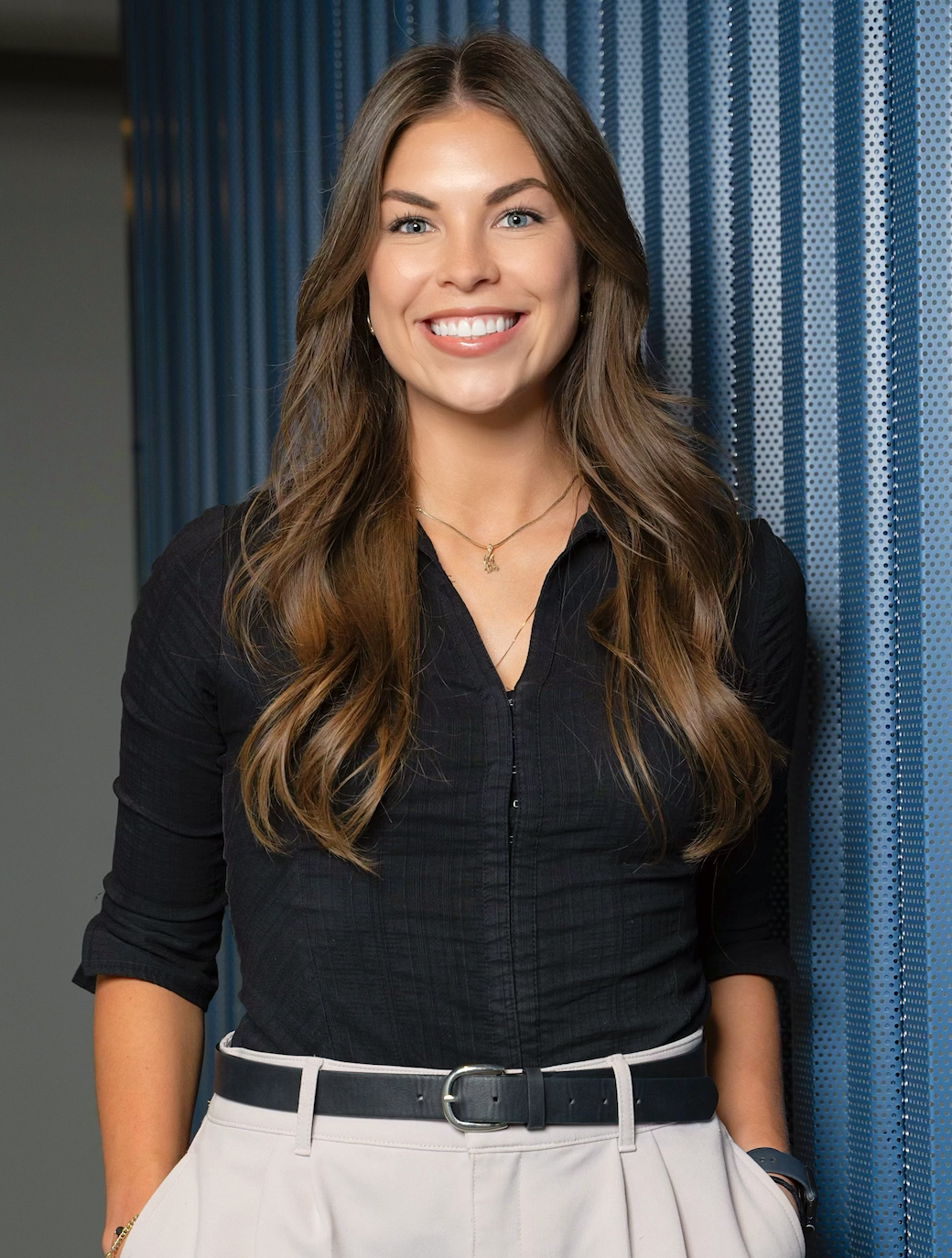
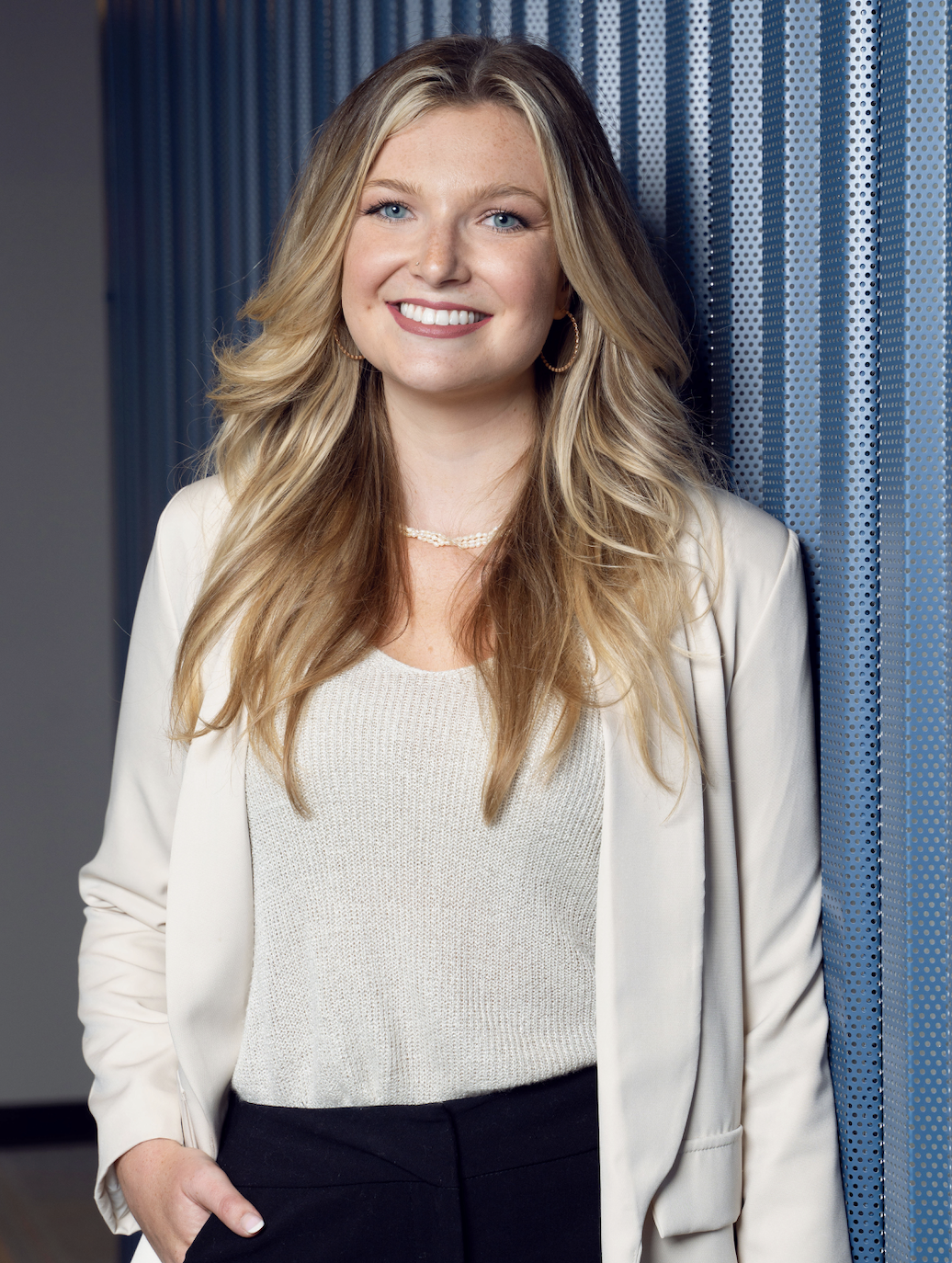
Founded in 2023 by Mary Squire and Alyssa Theroux, HeadStrait Labs is a Pittsburgh-based medical device company closing this 60-year innovation gap by modernizing trauma transport and prehospital care. Their flagship solution, the EVAC-1 with SMARTmotion, is a universal, sensor-equipped splint designed to adapt to any patient and integrate seamlessly into EMS workflows. By pairing physical stabilization with real-time motion analytics, the system informs crews of misalignments as they happen, turning a routine transport into a transparent, data-rich patient encounter.
Squire and Theroux met in Carnegie Mellon University’s (CMU) biomedical engineering master’s program, where a shared obsession with hands-on problem solving forged their partnership. A collaborative project in their medical devices class evolved into a high-stakes pitch competition—which they won. The 2022 win was a pivotal milestone for the team, providing the entrepreneurial spark and market validation they needed to launch their mission-driven startup.
HeadStrait Labs continues to advance data-driven trauma care through strategic partnerships, such as collaborating with the Oklahoma State University’s athletic training staff to define the EVAC-1’s height/weight limits using player biometrics. A landmark clinical study at UPMC, Pittsburgh’s premier healthcare provider, is underway and set to conclude in May 2026, yielding definitive device data.
Solution
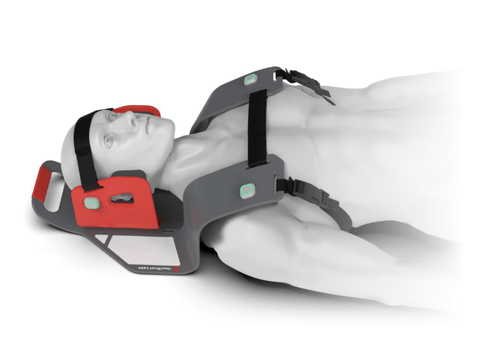 The 2024 Robotics Factory Accelerator served as a critical turning point for HeadStrait Labs, providing the resources and expertise necessary to bridge the gap between a lab concept and a market-ready medical device. During the program, Squire and Theroux led the high-stakes transition from Gen 1 to Gen 2, transforming their initial prototype into a compact, intuitive splint that physically mimics hands holding the head. While the accelerator provided the early funding and office space necessary to move the company forward, the true value lay in access to the Scale Shop and E-Lab. These resources enabled Squire and Theroux to prototype, test, and iterate on hardware entirely in-house, ensuring the new form factor fit standard EMS storage while preserving the sensor intelligence of the original concept.
Leveraging the robust technical environment and expert mentorship within Innovation Works, HeadStrait Labs was empowered to build out internal capabilities. Through the Robotics Factory, the HeadStrait Labs team worked with electromechanical engineer Andrew Katon to deepen expertise in CAD, mechanical design, and electrical integration. Robotics technician Luca DeGroot provided hands-on training in 3D printing and precision machining, enabling Squire and Theroux to design and fabricate rapid, in-house iterations. Technical collaboration with electrical prototyping engineer Brian Dougherty further accelerated growth, guiding the team towards a robust electrical design and system architecture harmonious with large-scale production. The enhanced performance of the Gen 2 prototype has expedited market entry, advanced commercial development, and increased the team’s visibility in the industry.
“The E-Lab and Scale Shop provided the hands-on resources and expertise we needed to move from a functional concept to a repeatable product.”
Alyssa Theroux and Mary Squire
Co-Founders, HeadStrait Labs
Squire and Theroux were initially drawn to Pittsburgh to pursue their master’s degrees at CMU, but they chose to stay for the region’s collaborative healthcare ecosystem and its deep-rooted commitment to patient safety innovation. That decision has paid off in spades. By strategically tapping into local networks, the company has propelled its growth, with over $225,000 in regional funding and a $350,000 investment from the Richard King Mellon Foundation. The company’s impact in the Pittsburgh community, however, extends far beyond the laboratory. By engaging in initiatives like the Hill District’s Citizen Science Lab, the company is reinforcing a mission to make emergency care as equitable as it is innovative. With IP protection and FDA preparations in motion, and product optimization underway, the team is aiming for a major presale in 2026.
As women founders navigating the male-dominated landscapes of medical devices and venture capital, Squire and Theroux bring a rigorous technical standard to an industry long defined by stagnation. Through disciplined engineering and bold ambition, HeadStrait Labs is doing more than just building a device. The company is fundamentally shaping the future of prehospital care by proving that the most powerful tool in trauma care isn’t just a smarter device, it’s a fresh engineering perspective.