
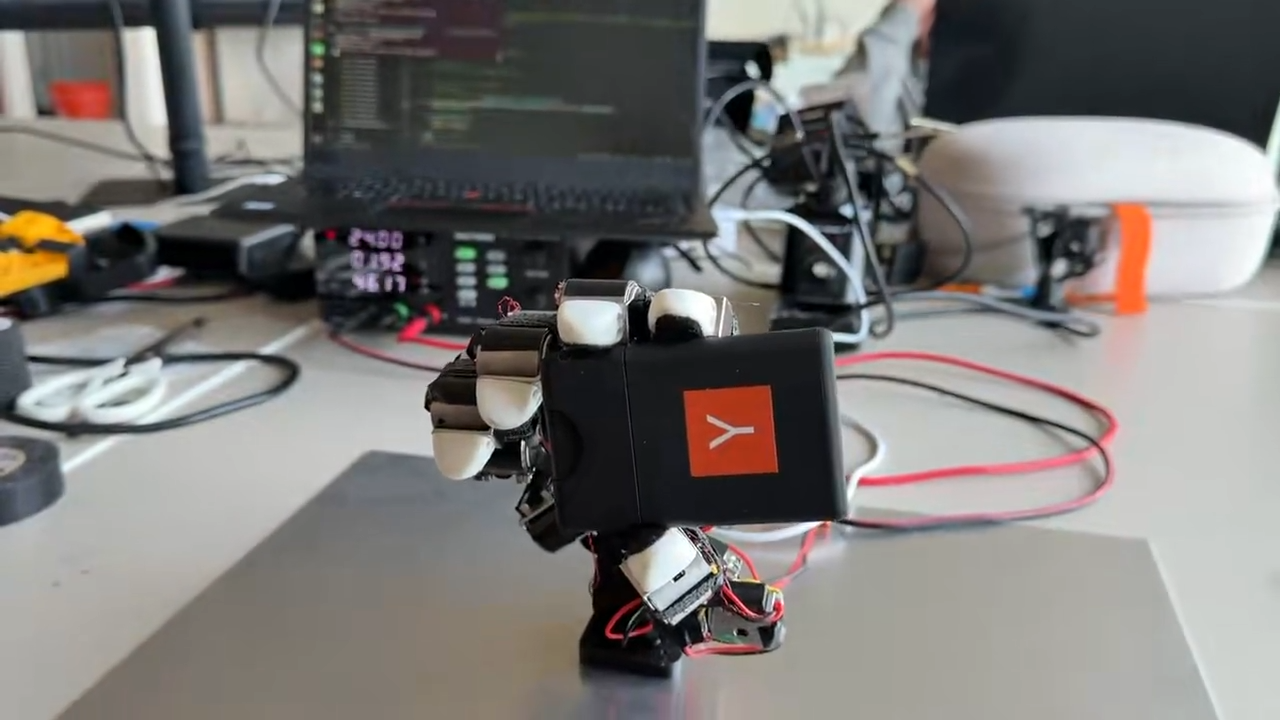
Robots can navigate environments and perform repetitive motions with increasing sophistication, yet they still struggle with delicate physical manipulation. Everyday tasks like folding paper, handling delicate objects, or coordinating fine finger movements remain elusive because traditional robotic hardware introduces friction, mechanical lag, and inconsistent force feedback. These limitations reduce precision and responsiveness, making it difficult for robots to accurately control grip strength, adapt to changing conditions, and reliably perform complex real-world tasks.
While researching robot manipulation for his PhD at Carnegie Mellon University (CMU), Quanting Xie realized that the industry’s slow progress wasn’t just a software problem, it was a failure of the hardware. Existing robotic hands were not designed to learn the way humans do, and the gap between simulation and real-world deployment continued to slow progress across the industry. What began as an academic frustration soon evolved into a broader vision for solving the “Dexterity Deadlock” in robotics.
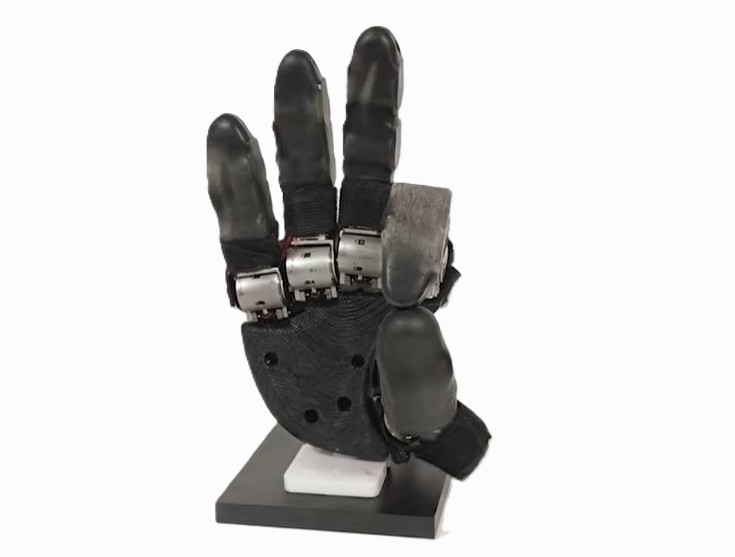
Founded in 2024 by brothers Quanting and Ryan Xie, Origami Robotics was created to rethink robotic manipulation from the hardware outward. Combining Quanting’s research background with Ryan’s experience as a robotics entrepreneur and engineer, the company is building a foundation for “manipulate anything” robotics. Origami Robotics pairs high-degree-of-freedom robotic hands with matching data-collection devices, allowing the company to capture real-world manipulation data and deploy learned skills directly onto its hardware. By creating the infrastructure needed to train physical AI systems in real-world environments such as factories and logistics centers, Origami Robotics is working to unlock a new era of adaptable, general-purpose automation.
Solution
Through participation in the 2025 Robotics Factory Scale Program, Origami Robotics gained the technical support and engineering resources needed to advance its highly specialized robotic hardware toward commercialization. At the time, the company was developing advanced high-torque miniature motors and intricate micro-gearbox systems designed to dramatically improve the grip strength, responsiveness, and precision of humanoid robotic hands. Because these systems relied on extremely small, high-performance components, even minor design inefficiencies or manufacturing inconsistencies could significantly impact reliability and performance.
Innovation Works and Robotics Factory provided hands-on engineering guidance that helped the team refine and strengthen its hardware designs during a critical stage of development. Design review sessions gave Origami Robotics the opportunity to evaluate mechanical performance, manufacturability, and scalability alongside experienced Robotics Factory technical mentors like electromechanical engineer Andrew Katon. The Scale program also helped the company assess how its intricate motor and gearbox systems could transition from prototype concepts into repeatable, production-ready components capable of supporting long-term growth.
Origami Robotics leveraged Robotics Factory’s CNC machining resources to manufacture the high-tolerance micro components required for its custom motor systems. Access to precision machining support enabled the company to rapidly iterate on complex designs while maintaining the accuracy and consistency necessary for next-generation robotic manipulation hardware. Together, these resources helped Origami Robotics accelerate development of the core infrastructure powering its vision for more capable, dexterous humanoid robotics.
“Huge thanks to the Robotics Factory Scale program to help us get initial prototypes on our gearboxes!”
—Quanting Xie, Co-Founder, Origami Robotics
Beyond technical development, Origami Robotics has benefited from a strong network of entrepreneurial, research, and commercialization communities that helped shape the company’s growth and vision. Alongside hands-on support from the Robotics Factory, Origami Robotics gained access to an influential network of deep tech founders and researchers through participation in the 5050 program’s C6 cohort. That expanding nexus of support helped propel the company forward as it continued building relationships across the robotics and startup landscape, including acceptance into Y Combinator’s Winter 2026 cohort and continued engagement with the CMU Swartz Center for Entrepreneurship.
Breaking the Dexterity Deadlock requires more than a better algorithm; it requires rethinking the hardware that enables machines to learn. By building high-performance robotic hands engineered for scalable data collection, Origami Robotics provides the infrastructure needed to train the next generation of dexterous systems. This approach reduces the barriers between simulation and real-world deployment, enabling robots to learn from high-quality physical data and perform increasingly complex tasks. The result is a new model for embodied AI that gives machines the intelligence needed to manipulate anything.