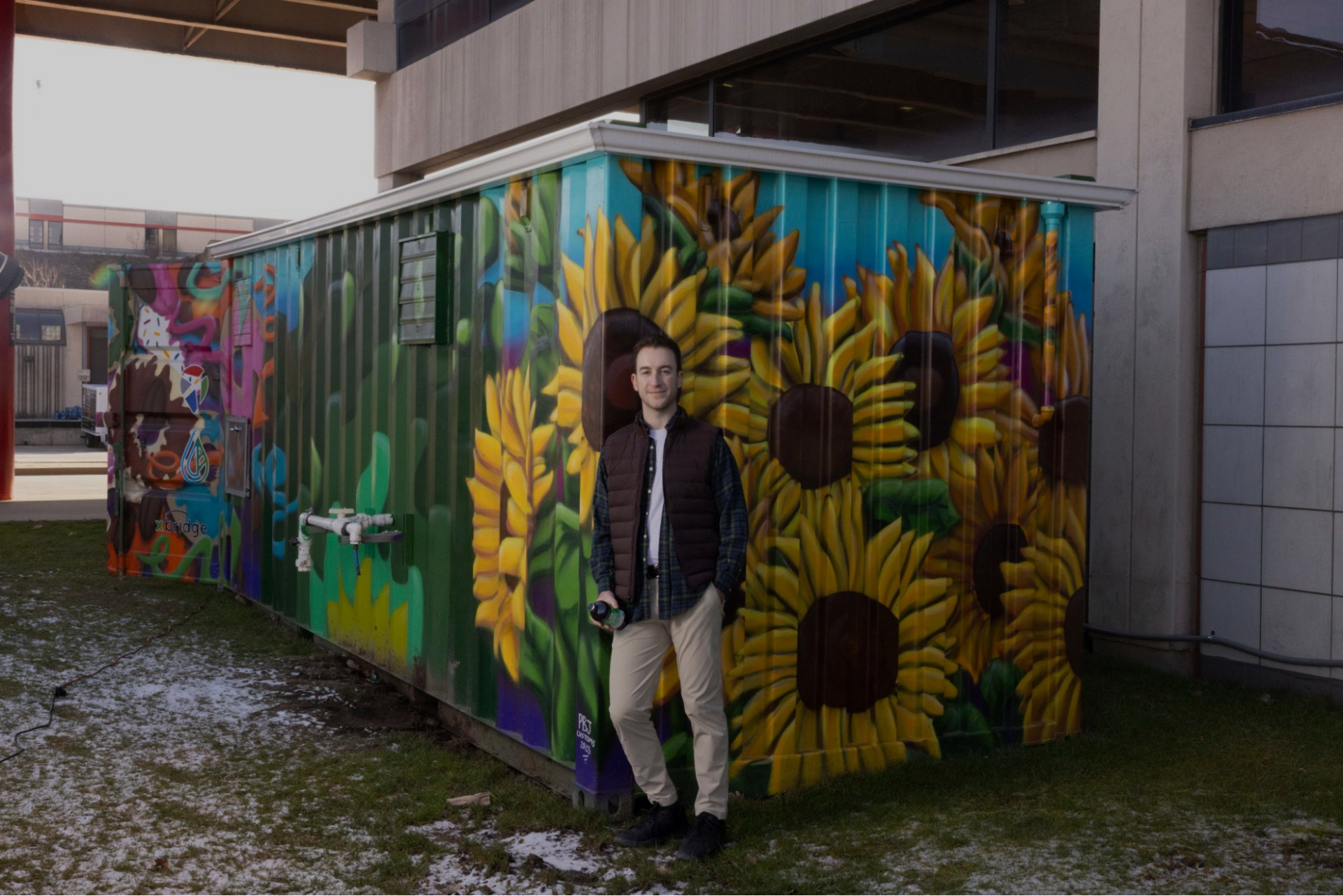
 With food waste accounting for nearly a tenth of the world’s greenhouse gas emissions, Ecotone Renewables was launched in 2019 with a clear mission to make sustainability both practical and profitable. The company’s roots trace back to a collaborative aquaponics project between Carnegie Mellon University, the University of Pittsburgh, and the University of Michigan, where early research reimagined food waste as a scalable, circular resource rather than a landfill liability.
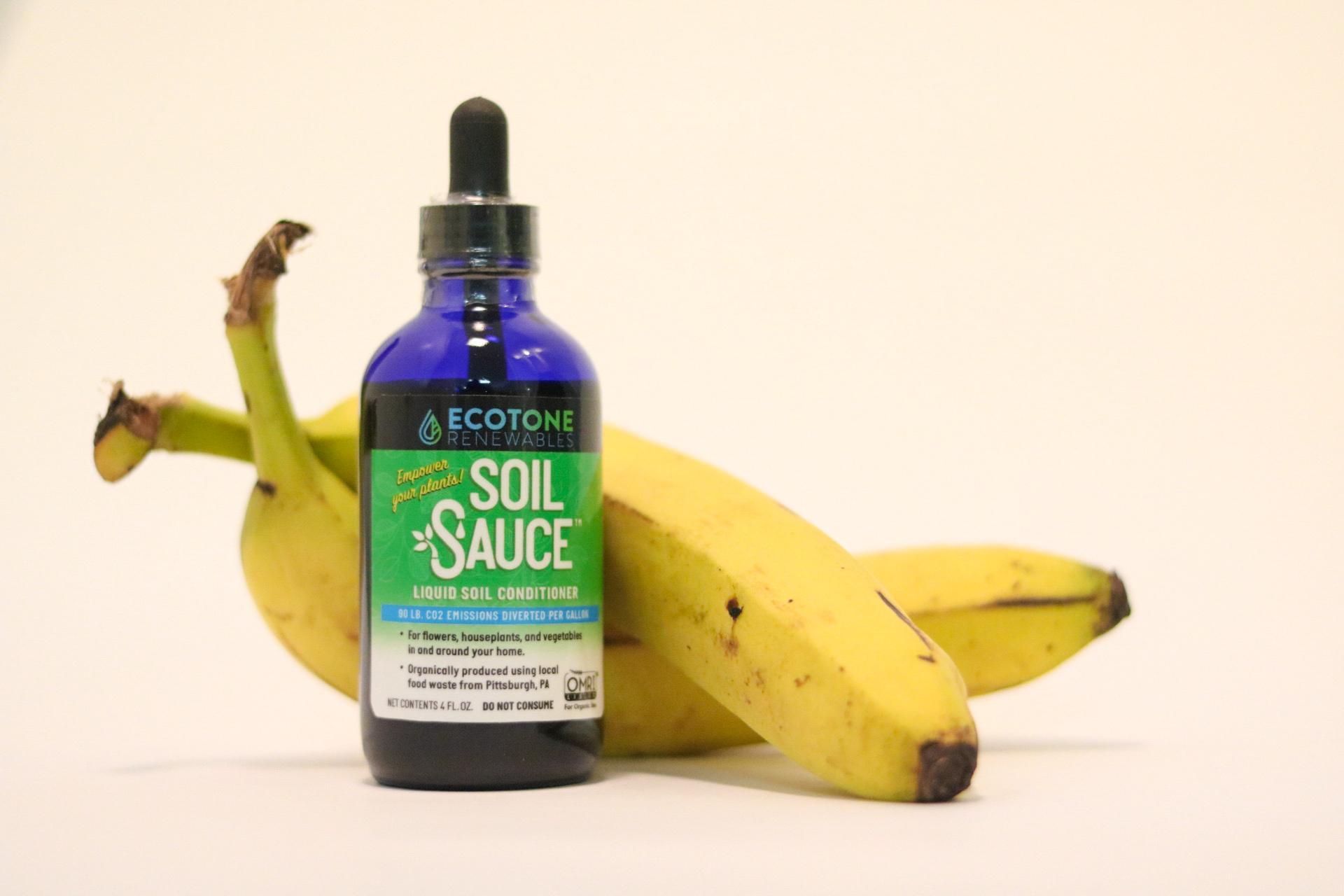
Led by co-founder and CEO Dylan Lew, Ecotone Renewables set out to eliminate the biggest barriers to food-waste solutions—unreliability, odor, and cost. Its Zero-waste Ecological Upcycling System (ZEUS) reimagines anaerobic digestion for real-world settings, using a right-sized, automated, and fully enclosed design to process even contaminated food waste cleanly, with minimal odor and nominal operator effort. Inside ZEUS, microbes quietly break down organics, while converting scraps into renewable energy and Soil Sauce, a nutrient-rich liquid fertilizer. Leased to organizations, ZEUS often offsets its own cost through averted waste hauling fees, while the commercially sold Soil Sauce completes the loop by allowing partners to share in a new revenue stream generated directly from their digester.
ZEUS goes beyond waste processing by turning food scraps into actionable intelligence. Its integrated camera-based sensors power a real-time analytics dashboard that reveals exactly what’s being wasted by type and volume surfacing daily, weekly, and monthly patterns. Deployed across hospitals, universities, restaurants, and corporate campuses, ZEUS pairs these insights with an automated, containerized biodigester that cuts hauling costs and CO₂ emissions, proving waste-free operations can deliver positive results in a myriad of settings.
“Being a two-minute walk from the Robotics Factory means expert assistance is just around the corner.”
— Dylan Lew, Founder and CEO
Solution
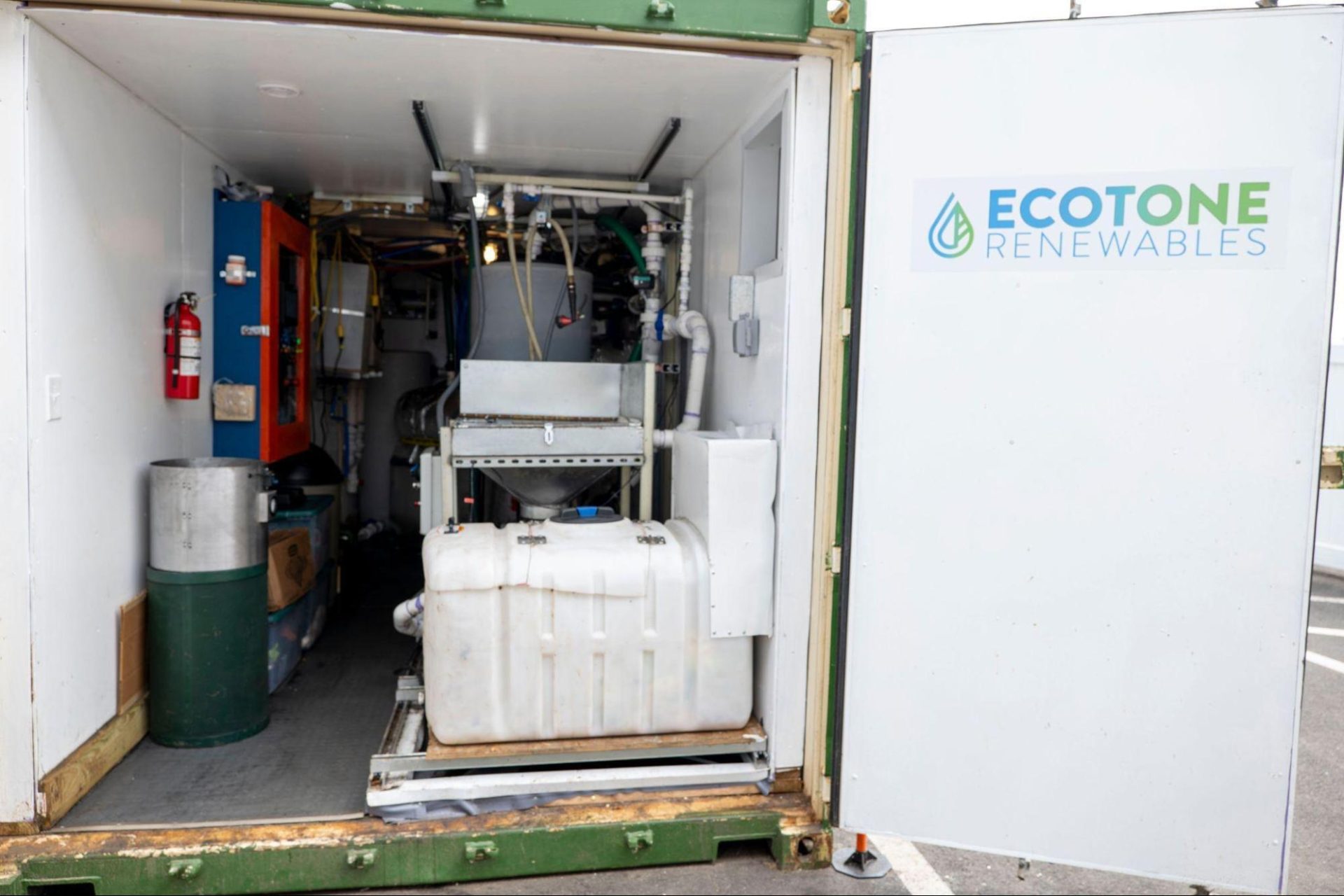 In 2023, Ecotone turned to the Robotics Factory through its Scale Program to redesign the digester front end. Robotics Factory engineers and technicians began by reverse-engineering the existing hopper to define its functional requirements, constraints, and failure points. Robotics Factory engineers produced a full 3D model and manufacturing-ready drawings for a new sink assembly, paired with detailed recommendations on materials, standards, and off-the-shelf component alternatives. The Robotics Factory team also connected Ecotone with vetted local manufacturers to support competitive quoting and early production runs.
Just as importantly, the Robotics Factory team focused on capability-building. Three Ecotone engineers were trained in sheet metal fabrication and welding, which enabled rapid in-house prototyping and modifications. Robotics Factory technician Luca DeGroot tested multiple welding approaches and fabrication techniques, helping the team iterate faster and smarter.
The result was a step-change in performance. Ecotone is now on version four of the ZEUS digester, with improved uptime, faster operator workflows, and a front-end system built for real-world use. By removing a critical manufacturing bottleneck, the partnership helped turn an improvised component into a scalable, production-ready solution, unlocking the next phase of growth for ZEUS and the resilient economy it enables.
The founders of Ecotone Renewables, recently named to the Forbes 30 Under 30, are accelerating their innovation roadmap with the launch of the company’s first fully mobile ZEUS pilot program. With its most advanced biogas system yet, the ZEUS-on-wheels reduces deployment costs and unlocks short-term trials, events, and mobile deployments,