
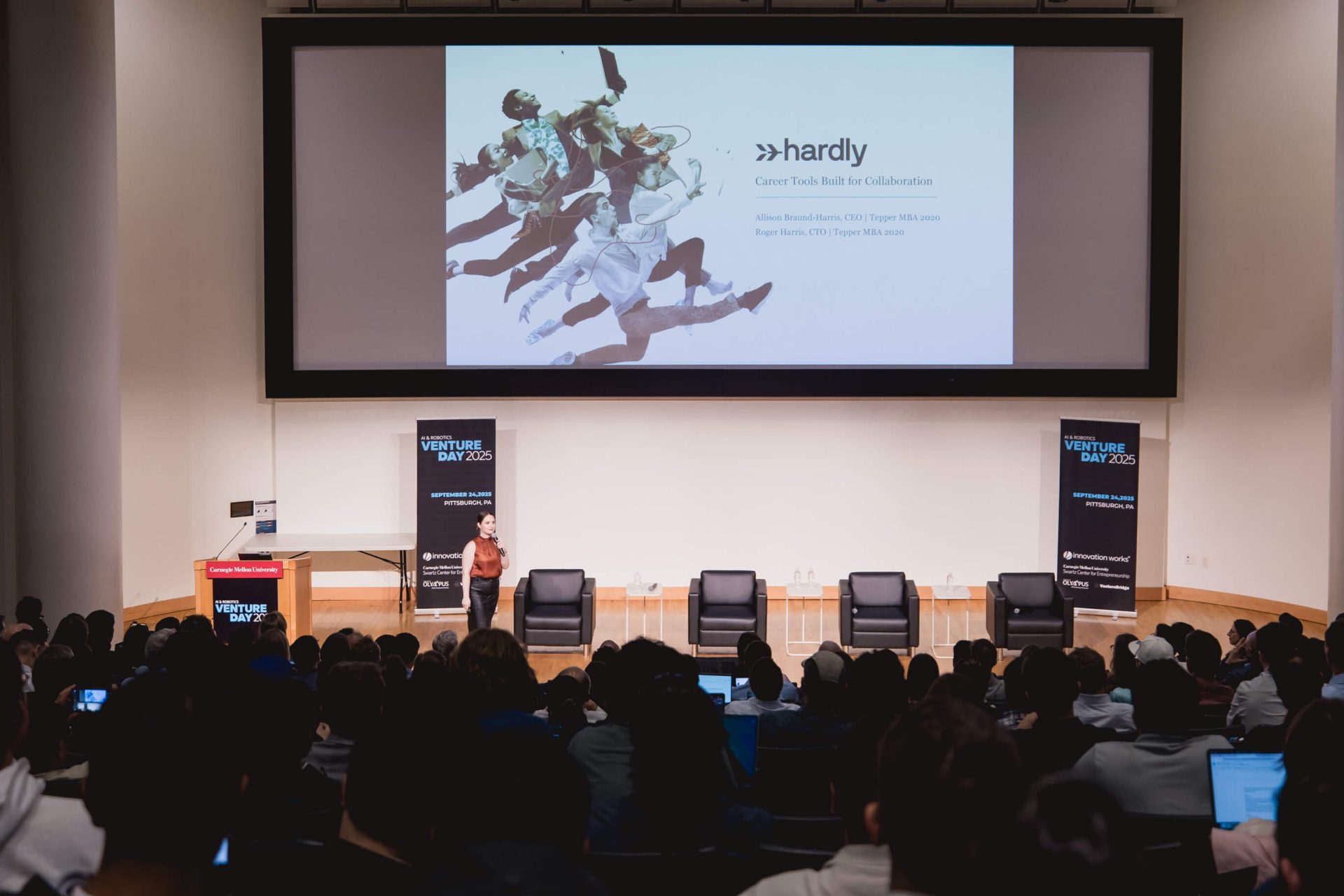
 Specialized B2B Vertical SaaS software company, Hardly, builds it own resume with discipline and clarity

When Allison Braund-Harris left her role at a branding & innovation agency in New York City, she wasn’t chasing a specific product idea. What she wanted was ownership.
“I knew I wanted to build something I could see through,” she says. Something she could grow, shape, and stand behind long term, an experience missing from the world of agencies where you have little control or even insight to what happens after work leaves your hands.
It was the middle of the pandemic. Friends were burned out from remote work. Conversations about stress and career uncertainty were a daily occurrence. To help, Allison began experimenting with tools focused on burnout and mental health, then broader career development support. She and her husband, Roger, began to focus on building a software tool to help friends and family members with resumes and career matching. It was just the right thing to do when people you cared about needed it. Then the realization came that this could be the ownership opportunity Allison dreamed about.
And so, Hardly was created.
Searching for the Right Customer
Like many early startups, Hardly didn’t land on the right market immediately. Given their start with friends and family, they began as a B2C company. But after more than a year in the career development space, Allison and Roger, who had joined first as a part-time consultant and then became full-time CTO, started noticing something important. Organizations serving job seekers needed better tools for the people they supported.
Hardly pivoted to B2B. Then they narrowed that even further.
Through direct conversations with potential customers, specifically representatives of workforce programs, technical schools, job centers, and community colleges, they realized their strongest opportunity was serving workforce development professionals: the selfless, overstretched, often under-resourced people helping others find jobs.
That focus changed everything.
Hardly’s AI-powered resume builder and interview practice tools became collaborative rather than prescriptive. Designed to empower users with options instead of constraints, they were able to give workforce organizations insight into how their participants were progressing, a metric they needed to not only justify their work, but see how they were helping others.
The company had found product-market fit. Now they needed to find a path to scale.
The 1-to-10 Moment
By the time they applied to AlphaLab, Allison and Roger knew their field and started to redirect their thinking on their ideal customer.
They had already been working closely with the Innovation Works ecosystem in Pittsburgh. They valued outside input from the organization and many other mentors and leaders. But they knew scaling from “1-to-10” required a different level of discipline than they were able to achieve on their own.
Yes, the funding that AlphaLab supplied mattered. It would relieve the day-to-day financial pressure and allow them to think strategically.
But what they didn’t expect was how much structure and community would matter even more.
The weekly accountability became a forcing function. Instead of chasing twenty possible messaging directions, they refined their story down to a few clear, confident explanations. Instead of hesitating on pricing, they learned to become objective, raising prices thoughtfully, framing discounts strategically, and avoiding being pigeonholed as the “budget” option.
“It was mentorship, good advice, and a little bit of founder therapy,” Roger reflects.
The isolation that often defines startup life was replaced with a room full of people tracking their progress, asking hard questions, and cheering them forward.
Choosing Depth
Participating in AlphaLab also helped them sharpen execution.
On the technical side, AlphaLab helped the team focus on critical milestones rather than building “shiny new things.” After deeper customer conversations, they realized clients didn’t need the fully expansive vision they originally imagined. They needed a strong, practical middle ground.
That shift from building what they thought was impressive to building what customers actually needed, clarified the roadmap. And customers took note. The company was able to gain some key accounts that shifted their focus and led to an important decision.
After completing AlphaLab and later participating in BNY UpPrize, Hardly made a deliberate decision to expand within their existing customer base before chasing new leads.
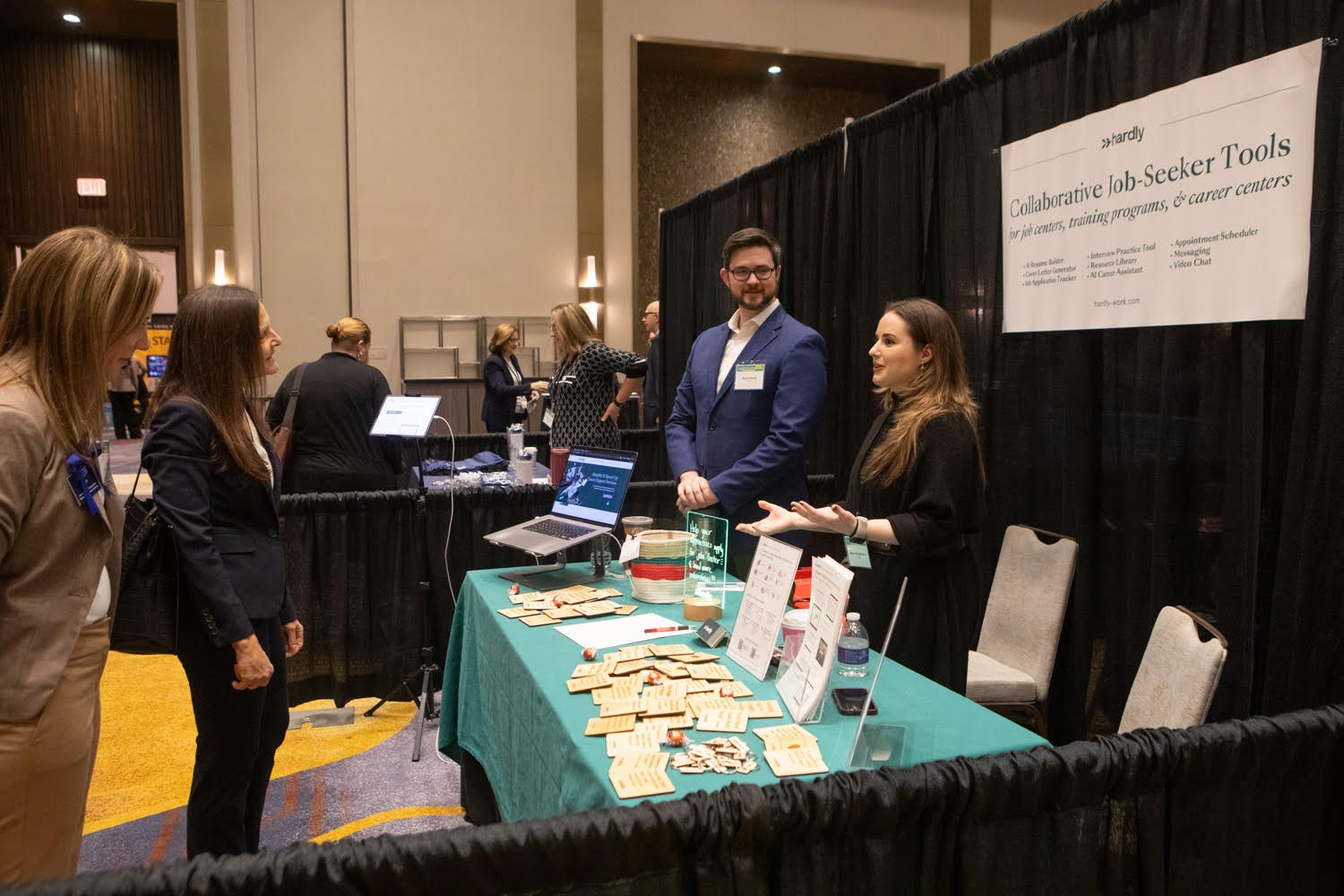
With limited resources, it became obvious that it was the right time to put depth before breadth. They expanded into additional locations and offices with current customers — including securing a project with the largest community college system in the United States. They began speaking at major industry events like the National Association of Workforce Boards Conference, presenting alongside customers about innovation in workforce technology.
Meanwhile, the product team doubled down on strengthening their core offerings: improving user management tools, adding robust data insights, and integrating AI in ways that help organizations demonstrate impact to funders.
Why Workforce Development?
Hardly’s founders, Allison and Roger, are clear-eyed about their market. Workforce development isn’t a field where unicorn valuations are common, but that was never the goal.
The people in this field — the counselors, coaches, and administrators — are often underpaid, overworked, and deeply committed to helping others succeed. Helping them do that is the mission that keeps Allison and Roger grounded.
“It’s incredibly satisfying to feel like we’re making a big difference in someone’s life every day,” Allison says.
Listening as a Growth Strategy
Hardly has grown from pandemic experiments to national partnerships, from twenty versions of a message to one confident story, and from chasing ideas during a global pandemic to executing a focused strategy that turned into a growing startup.
Hardly’s journey offers a powerful reminder that clarity comes from listening and embedding yourself in the right communities. Their biggest breakthroughs happened when they stopped assuming who their customer was and started having deeper conversations. By paying attention to patterns in what they were hearing, they were able to narrow their focus from a broad audience to a specific group that truly needed their solution. For founders, the lesson is simple: let real customer insight shape your direction, even if it means pivoting.
Another key takeaway is that product-market fit isn’t the finish line, but a starting point for disciplined growth. Scaling requires sharper messaging, confident pricing, and focused execution. Hardly is positioned to continue their journey by not chasing every opportunity. Instead, they are focused on refining what was already working. Hardly strengthened its core product, expanded within existing customers, and resisted the temptation to build flashy new features before the fundamentals were solid and they were able to build with their identified customer instead of just anticipating functionality.
Ultimately, Hardly’s story shows that mission and business rigor can coexist. Serving a purpose-driven market doesn’t mean sacrificing scale. In fact, the more disciplined the business, the greater the long-term impact. For founders building in meaningful but complex spaces, the lesson is clear: listen closely, focus deeply, and build with intention.