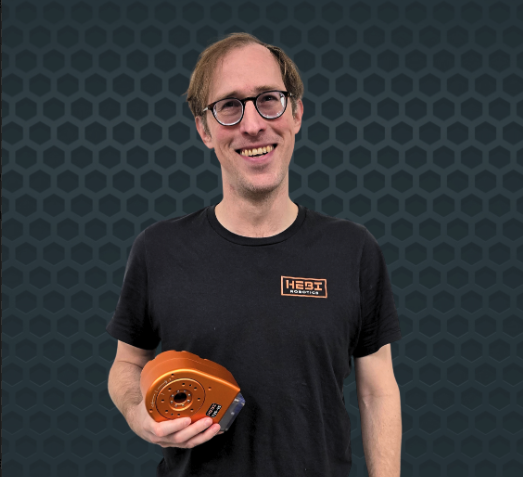
HEBI Robotics builds the modular hardware and software tools that make it easier to build a robot. “Our mission is to make building robots easy,” says CEO Bob Raida. “That’s easy to say, but a very challenging problem.” What started as a Carnegie Mellon snake-robot research project in 2014 has grown into a platform used by NASA, JPL, and Chevron, with the company now building hardware for space and the deep sea.
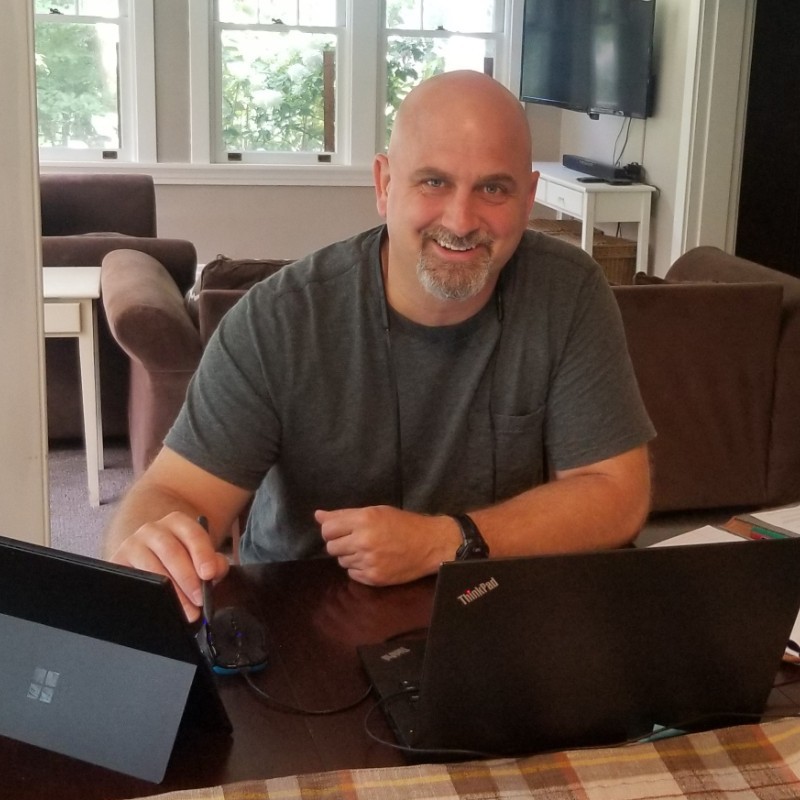
Bob Raida, CEO, HEBI Robotics
Born in the Snake Lab
HEBI Robotics started in 2014 inside Carnegie Mellon University’s Biorobotics Lab, known informally as the Snake Lab, where a team led by professor Howie Choset was building modular snake robots under what they called the ModSnake project. “We were basically inventing smart servos before those were a real thing,” Raida said, describing modular joints packed with motors, controllers, gears, and sensors that could be chained together (a dozen or more at a time) into a robot that could wind its way through pipes or rubble. HEBI launched that year with four researchers from the lab and Choset himself, already suspecting that the real value wasn’t the snake shape, but the actuator technology inside it. The name HEBI is the Japanese word for snake, chosen to honor a field of research centered largely in Japan.
Bob Raida joined the group about six months in, while finishing his MBA at Carnegie Mellon’s Tepper School of Business, after Choset asked a professor there to put together a student project on where the lab’s tools might find customers. Raida kept consulting for HEBI part time after graduating, and became its first full-time paid employee more than a year later, once the company closed its seed round in 2016.
The Pivot That Defined the Platform
By the time HEBI’s technical founders were finishing up at CMU, they’d already sensed where the real business lived. “The team had developed these tools in the lab to make it easier to build, maintain, control, and repair snake robots, and very quickly saw that that’s where the value was, not necessarily in the snake itself,” Raida said. That insight reshaped the pitch: instead of selling one robot, HEBI would sell the tools other people could use to build their own.
In June 2016, HEBI closed a seed round led by Foxconn, whose head of robotics had a strong relationship with Choset and wanted help automating contract manufacturing. The plan was for HEBI to build tools around Foxconn’s needs, with Foxconn as its biggest customer for years to come. It didn’t work out that way. “They didn’t have as crisp a picture as we would have hoped… “It was just kind of a mismatch,” Raida said, between what HEBI’s technology could do at the time and Foxconn’s broader goal of reducing manpower. The project wound down, though Foxconn stayed on as what Raida calls “a silent partner” on the cap table, and the relationship remains amicable.
Finding a Foothold in Industrial Inspection
With Foxconn no longer the anchor customer, HEBI found a new lifeline: academic and government researchers who had discovered the company’s tools through YouTube videos and robotics conferences. NASA and JPL became early users, alongside universities around the world teaching robotics with HEBI’s hardware — enough of a market, Raida said, “to keep a small company like us going while we figure out where we want to go with things.”
The next turn came from Chevron. An R&D leader there saw a HEBI robot demo at a robotics research conference and asked if HEBI could build an arm to automate pipe-elbow inspections, this one compliant and “squishy” compared to a rigid industrial arm. HEBI said yes, and the project pushed the company to build sealed, weatherproof actuators that could handle dust and water outdoors. That work became the basis for HEBI’s first real production deployments, inspecting wind turbine blades.
Each new customer, Raida said, funds the next round of tools. HEBI considered leaning further into inspection and maintenance work and raising venture capital around it before COVID, but decided against it.
“We decided rather than chase investors, we’d chase customers.” — Bob Raida, CEO, HEBI Robotics
Instead, HEBI leaned into finding uniquely challenging customer-funded projects to build out its platform, without, as Raida put it, changing the company’s DNA.
Built in Pittsburgh, with a presence in Austria
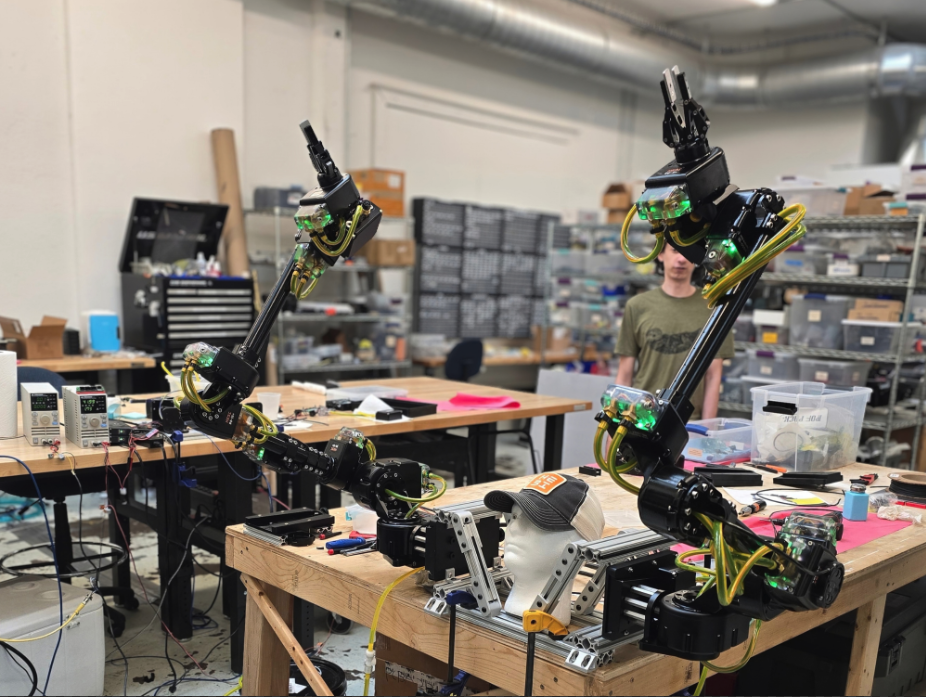
Robotics arm by HEBI Robotics
HEBI has stayed headquartered in Pittsburgh. “For me, it’s quite simple: quality of life,” said Raida, who grew up in the region, moved away for a time, and came back to start a family. He points to a lower cost of living than other technology hubs and steady access to talent from the city’s universities, where all of HEBI’s founders first met. The founding team itself came from farther afield: Choset grew up on Long Island, other early team members came from Vermont, Southern Virginia, and Texas. Co-founder Florian Enner grew up in Salzburg, Austria. Enner has since moved back closer to family, and HEBI now keeps an office there.
What’s next: space and the deep sea
After roughly a decade of organic growth with no dedicated sales team, HEBI is now planning a growth round of capital to build one out It will be aimed at business development, targeted marketing, and engineering work that makes it easier for industrial customers to buy from HEBI directly. “We’re confident we figured out the formula,” Raida said, describing outreach not to the companies that need a robot, but to the engineering firms and systems integrators that build them.
On the technology side, NASA remains both a customer and a champion, pushing HEBI toward space-rated hardware. “HEBI intends to go to space by the end of 2027, and eventually to the moon,” Raida said. Closer to home, the Johns Hopkins Applied Physics Laboratory asked HEBI to build a version of its hardware for the deep sea. A prototype rated for operating at roughly 1,000 meters depth was delivered the week of this interview, with more details expected by the end of the year.