
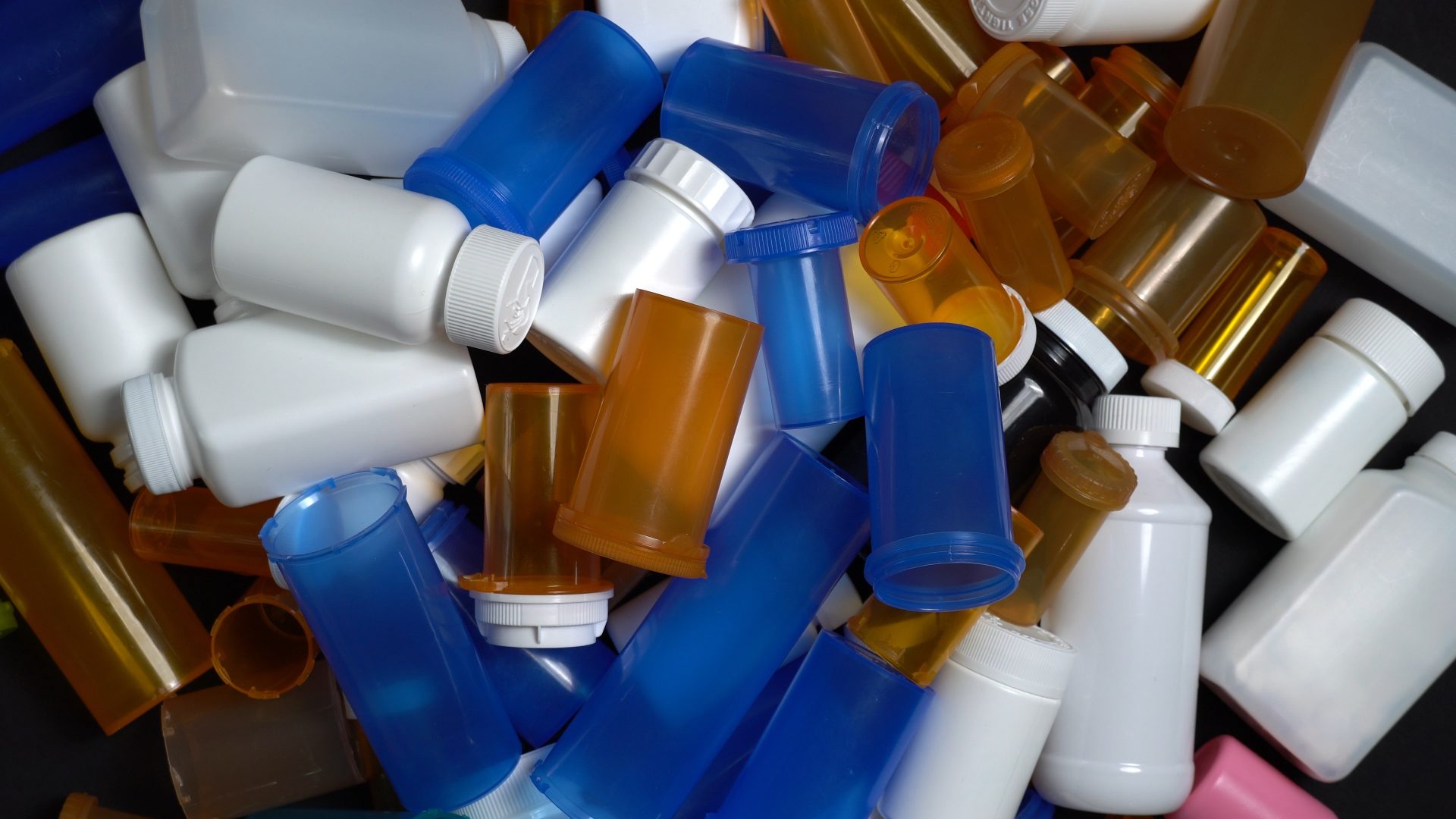
The Problem: Healthcare’s Plastic Waste Crisis
When Melinda Lee was a pharmacy student, she handled thousands of prescription bottles every day. What she couldn’t ignore was the waste. Unclaimed prescriptions were discarded. Used bottles couldn’t be reused. And despite widespread assumptions about recycling, much of that plastic ultimately ended up in landfills, incinerators, or worse, overseas where developing countries are least equipped to handle it.
For Lee, the issue felt deeply personal. Born in Malaysia, she watched her home country become a destination for the world’s plastic waste after China stopped accepting imported recycling materials. Standing in a U.S. pharmacy, she saw a direct line between those mountains of disposable packaging and the landfills and waterways back home.
“It was a problem I saw every day,” Lee said. “Patients were frustrated by the waste. Pharmacists were frustrated by the waste. But there wasn’t another option.”
That realization became the foundation for Parcel Health, a company on a mission to remove single-use plastic from healthcare supply chains, starting with one of healthcare’s most overlooked products: the prescription pill bottle.
Solution: Connections through the Innovation Works Ecosystem
AlphaLab Health: Learning to Build
When Lee relocated to Pittsburgh, she began exploring the local startup scene. In what she laughs off as a happy coincidence, she discovered AlphaLab Health located just a block from her new home in Bellevue, PA. She applied and was accepted into AlphaLab Health’s second cohort during the height of the pandemic.
The program gave Lee her first structured introduction to startup building: fundraising, intellectual property, regulatory navigation, team development, and healthcare commercialization. But the most valuable resource wasn’t any curriculum. It was honest mentorship. Lee credits guidance from the AlphaLab Health team, including then-Managing Director Megan Shaw, as transformative. “Startup founders don’t always get honest feedback,” she said. “People are excited about what you’re building, but they don’t necessarily tell you when you’re getting distracted or heading in the wrong direction.”
Weekly conversations and candid guidance gave Lee something many early-stage founders struggle to find: an experienced partner willing to challenge assumptions and sharpen strategy.
Scale Residency: Iterating to the Right Product
Those lessons proved critical when Parcel Health confronted an uncomfortable truth: the company had identified the right problem, but hadn’t yet built the right solution. Its original approach to sustainable healthcare packaging didn’t work effectively enough for customers. So the team did what great startups do: they listened, iterated, and rebuilt. That process accelerated during Parcel Health’s Scale Residency at Robotics Factory (AlphaLab Gear), where Lee found herself surrounded by founders tackling manufacturing and product development challenges every day. The collaborative environment, with ready access to rapid prototyping, 3D printing, and peer expertise, helped Parcel Health move quickly through design iterations.
“We were doing so much prototyping and so much iteration around the product,” Lee said. “Being around other founders who understood manufacturing challenges helped us move much faster.”
“Being around other founders who understood manufacturing challenges helped us move much faster.”
– Melinda Lee, Cofounder and CEO, Parcel Health
The residency also created lasting relationships. Many of the founders Lee met remain among her closest professional peers today.
Seed Funding and Healthcare Access: Opening the Right Doors
For healthcare startups, getting in front of the right customers is one of the hardest challenges. Through AlphaLab Health, Parcel Health gained direct access to Allegheny Health Network (AHN) — opportunities to build relationships and gather feedback from healthcare leaders before the product was fully ready. Those early conversations didn’t immediately produce a commercial agreement. But they helped the team better understand customer needs and refine the product. When Parcel Health relaunched its redesigned solution — the Tully Tube — those relationships opened doors again.
AHN became the first health system to adopt the Tully Tube.
That decision changed everything. Healthcare organizations are often cautious adopters of new technologies. AHN’s willingness to go first gave other health systems the confidence to follow. In less than 18 months since launching, Parcel Health now works with more than 11 health systems nationwide, with momentum continuing to grow.
“AHN’s leadership team got to know us over the years. Once we had the right product, they stepped forward to lead the charge,” Lee said. “Being first gave other healthcare systems confidence to move forward.”
 The Product: Redesigning More Than Packaging
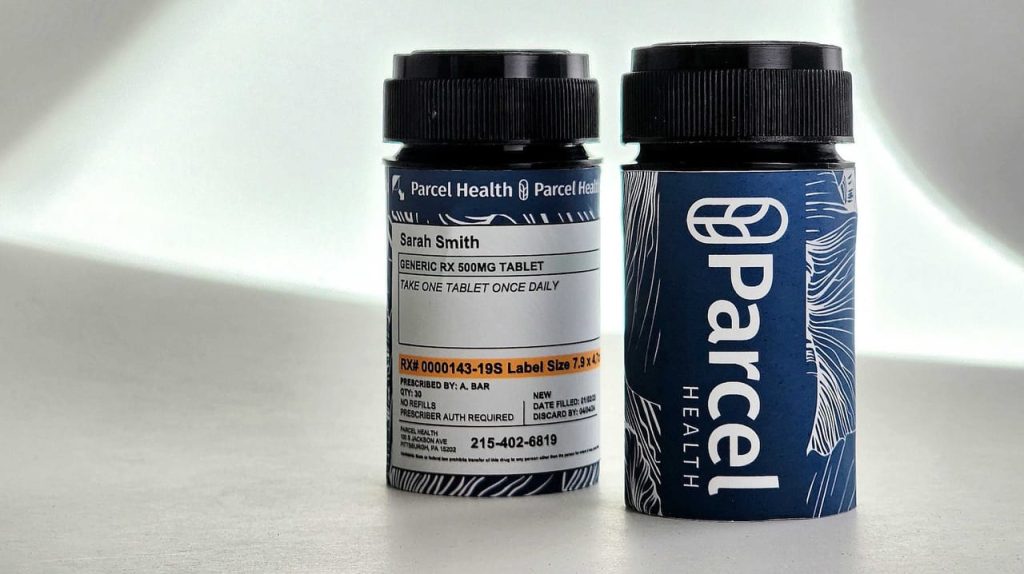 The Product: Redesigning More Than Packaging
Parcel Health’s flagship product, the Tully Tube, is built on a simple but powerful insight Lee observed throughout her pharmacy career. Healthcare had solved incredibly difficult challenges, drug development, clinical testing, manufacturing, distribution, but had largely ignored the patient experience surrounding medication itself. As a result, patients were often hesitant to take prescribed medications that arrived in generic orange pill bottles, yet those same individuals may eagerly purchase supplements in attractive, consumer-friendly packaging.
“We want patients to feel like they’re taking care of themselves,” Lee said. “Not like they’re being punished.”
In early pilot results, health-systems saw an uptick of prescription fills when pharmacies started using Tully Tube. It reinforced the insight that patients wanted better. For the first time, Tully Tube helped patients see their prescriptions as part of self-care rather than a reminder of illness. And for health systems, it became a successful plastic reduction initiative and created a strong, ongoing patient engagement tool.
Results and What’s Next
Today, Parcel Health has grown to six full-time employees, with a network of contractors supporting continued expansion. The company is actively scaling manufacturing, piloting domestic production, and expanding its product portfolio to help pharmacies reduce plastic waste across multiple areas of operation.
What once seemed like a niche sustainability initiative has become a practical operational solution for health systems seeking to reduce waste and increase patient engagement and retention without increasing costs.
For Lee, the opportunity remains enormous. Parcel Health’s mission has always been bigger than a single package design: to reduce plastic throughout healthcare supply chains and prove that sustainability and business performance can work hand in hand.
Why Build in Pittsburgh
Pittsburgh played a meaningful role in making Parcel Health possible. The city’s affordability gave the company room to experiment, iterate, and find product-market fit without the pressure of high burn rates common in larger startup hubs. The region’s healthcare institutions provided access to early customers and collaborators. And Innovation Works helped transform what began as a temporary move into a long-term commitment.
“AlphaLab Health and Innovation Works played a big part in our decision to build the company here,” Lee said. Today, Parcel Health calls Pittsburgh home.