Spaceflight is unforgiving, where even the smallest component malfunction can cascade into a mission-ending event. Valves, which regulate propellant and high-pressure gas flow, remain the most notorious point of failure. Despite decades of evolution, legacy designs remain so unreliable that engineers are forced into costly, triple-redundant seals. The extensive testing, review, and procurement of spare parts costs millions and embeds a recurring risk into every launch, leaving valve failures as a leading cause of delays and lost missions.
Founded in 2023, Space Precision Systems (SPS) is reimagining critical spacecraft infrastructure by engineering next-generation valves and precision mechanisms. By pioneering a proprietary all-metal, non-leaking valve, SPS has engineered a sealing solution that thrives under the very extremes that compromise traditional components. This “hardened by design” approach reduces major technical risks, transforming the valve from a mission-ending vulnerability into a high-performance foundation for success.
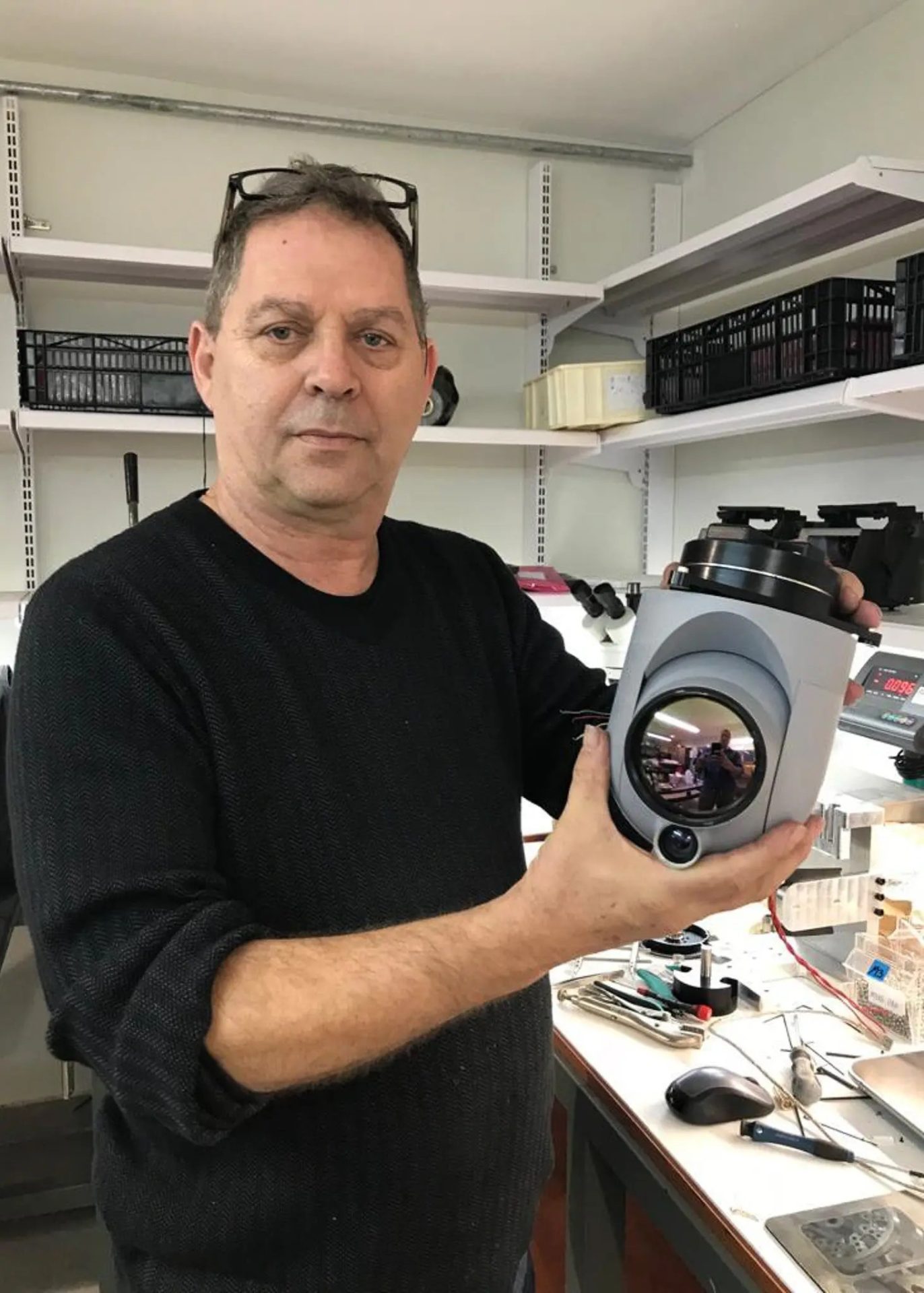
CEO Hahna Alexander leads SPS with deep expertise in complex lunar robotics. During her time at Carnegie Mellon University (CMU), she worked on the Google Lunar X Prize under legendary roboticist William “Red” Whittaker and thrived at NASA and SpaceX internships. Alexander later served as Mission Director for Astrobotic’s Griffin Mission One, where she partnered with SPS CTO Daniel Sherwin, a veteran mechanisms engineer, who was developing hardware for the mission. Together with CFO Gal Inbar, an expert in scaling complex technology ventures, the team founded SPS to address the critical technology gaps they witnessed firsthand—modernizing fundamental componentry to set a new standard for robust and dependable space missions.
Solution
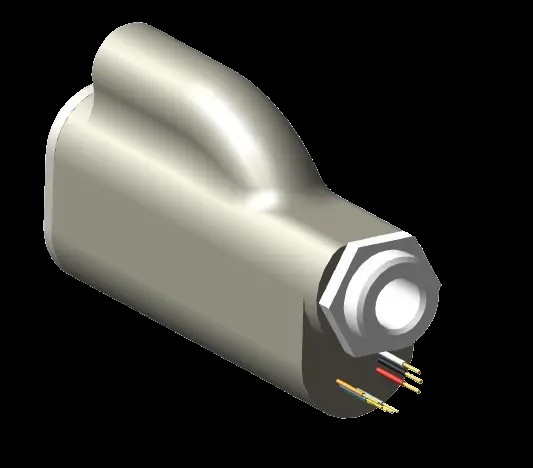 Drawing on decades of mechanisms expertise and hard-earned lessons from space missions, SPS decoded legacy limitations to engineer a new paradigm. The result is a novel, bi-directional, all-metal sealing architecture designed to outperform traditional elastomer-based systems in extreme environments. Built to withstand launch vibrations and foreign object debris, the design provides rapid actuation and precise control across diverse mission profiles. The system reduces the chance of leaks, and introduces potential system-level efficiencies by enabling propulsion architectures to be designed for higher pressures. Early prototypes have already demonstrated promising results, successfully passing initial leak tests and validating a fundamentally different approach to one of the industry’s most chronic problems.
The support of Innovation Works and the Robotics Factory catalyzed the early progress of SPS. Through the AlphaLab Accelerate program and the Robotics Factory Scale residency, SPS gained the necessary structure and scrutiny to refine both the technology and the business. By leveraging lab resources, the team 3D printed physical models that gave customers and investors a tangible understanding of the product’s design. At the same time, intensive customer discovery sharpened the way SPS communicates value to a risk-averse industry.
A critical component of SPS growth was the iterative feedback provided by the Robotics Factory during the Small Business Innovation Research (SBIR) application process. Through detailed reviews of proposals and deliverables, experts like Andrew Katon helped strengthen the technical narrative and sharpen the language to better communicate their vision. The combination of technical insight and strategic guidance has positioned SPS to pursue non-dilutive funding while advancing toward flight-ready system integrations.
As SPS matures core technology, the company’s influence on spacecraft architecture continues to rapidly expand. The non-leak valve and sealing system anchors the SPS portfolio while serving as a technical blueprint for a broader suite of mission-critical hardware. Building on this foundation, SPS is applying this same systems-level rigor to develop high-accuracy gimbals, specialized drivetrains, and precision robotic joints—broadening the company’s reach in the spacecraft subcomponents market.
|
Reinforced by a growing network of regional support, SPS remains embedded in a collaborative ecosystem that has sharpened its market focus and expanded technological vision. For co-founder Hahna Alexander, this second engagement with the Innovation Works pipeline has been transformative, solidifying the company’s standing as a mission-driven leader with a clear, definitive value proposition. Now focused on scaling what works, SPS is advancing seal R&D and securing government funding while expanding its technical footprint into space-qualified precision mechanisms. By eliminating the space industry’s most persistent failure points, SPS is engineering the absolute certainty required for today’s spacecraft missions.