
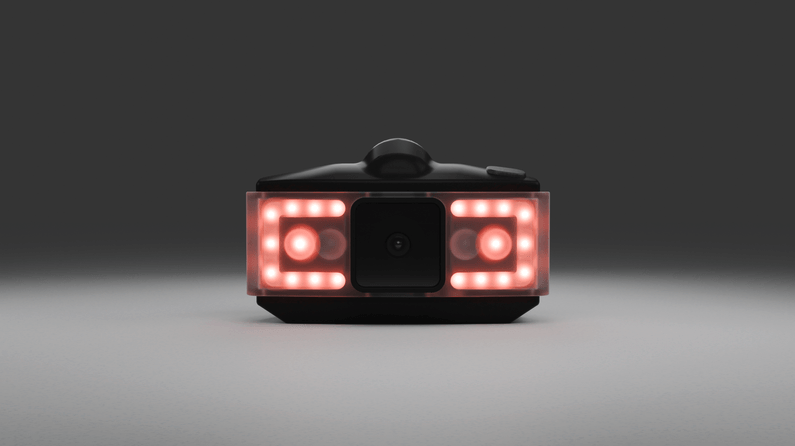
 With cyclist fatalities climbing in cities and infrastructure lagging, Velo AI is confronting the urgent challenge of bike safety. Copilot, Velo AI’s debut product, combines advanced sensors and AI to give riders and drivers real-time situational awareness while capturing near-miss data that helps planners design safer urban infrastructure. The result is more than protection for individuals—it is a data-driven path to safer cities.
Founder and CEO Clark Haynes turned years of bike commuting into the inspiration for Velo AI. Riding more during the pandemic, he saw firsthand how dangerous city streets were for cyclists. Frustration quickly turned into action, and he began prototyping Copilot in his basement. With a background in robotics and machine learning and years of work on autonomous vehicles at Uber and Aurora, Haynes sought to leverage similar self-driving AI technologies to assist with cycling safety, officially launching the company in 2022.
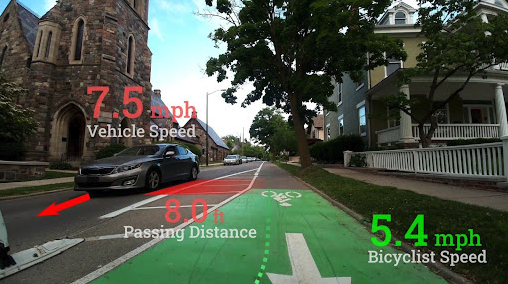
Copilot is about the size of a standard bike light yet constantly scans traffic from the rear, detecting vehicles, predicting overtakes, and identifying risky driver behavior. When danger looms, it flashes lights and issues audible alerts to protect cyclists and warn drivers. Unlike traditional radar-based bike sensors, which cannot distinguish vehicle types or safe passing distances, Copilot’s camera and computer vision models identify vehicles, estimate speeds, and predict driver behavior to alert cyclists in real time.
But Copilot goes beyond personal protection. It transforms bikes into rolling data collectors that map risk patterns and reveal danger zones before crashes occur. With real-world deployments in cities like Ann Arbor and Pittsburgh, Velo AI proves that smart cycling tech can be the impetus for systemic change, giving communities the intelligence to design safer, more rider-friendly roads.
“One of the major ways the Accelerator Program helped us was by showing us the 10% that we need to know to get 90% of the way. It’s a crash course in how to run and grow a business.”
— Clark Haynes, Founder & CEO
Solution
 Velo AI tapped into the mentorship, resources, and ecosystem of the Robotics Factory (a program of Innovation Works) as part of the inaugural Accelerate Program cohort in 2023—and true to its name, the program supercharged their momentum. With its support, the team fast-tracked Copilot into its second generation, refining the design through prototyping and technical evaluation. With access to the Robotic Factory machine shop, a talented team of Velo AI interns were able to rapidly 3D print and prototype, testing new designs and hardware configurations at speed.
These efforts paid off: the initial grapefruit-sized prototype evolved into a sleeker, self-contained device, supported by improved workflows. The company was actively solving the challenges of scaling up production by dealing with the intricacies of supply chains, logistics, and quality control. Alongside the technical progress, the Accelerate Program also provided strategic mentoring on spending funds wisely, navigating supply chains, and building for scale.
By the end of the program, Velo AI had more than a refined product—it had the full backing of Innovation Works and the Robotics Factory, gaining a network of mentors, partners, and resources to keep iterating and growing. What began as an early prototype is now on track to become a scalable tool delivering a real-world safety net for cyclists and a blueprint for AI-powered mobility.
Deeply rooted in Pittsburgh’s Lawrenceville neighborhood, Velo AI has built a dynamic alliance with partners like Duquesne University, Carnegie Mellon’s Mobility Data Analytics Center and Swartz Center for Entrepreneurship, BikePGH, and the POGOH bike share fleet deployment. But Velo AI’s impact extends beyond Pittsburgh. With partnerships in cities like Ann Arbor and Columbus, Velo AI merges historical crash records with real-time near-miss detection to guide strategic infrastructure improvements. Not just a bike light, Copilot turns every ride into intelligence. What started with Haynes’ daily ride headaches has grown into a movement: harnessing AI to reimagine how communities far and wide can build the infrastructure that protects and empower every rider.